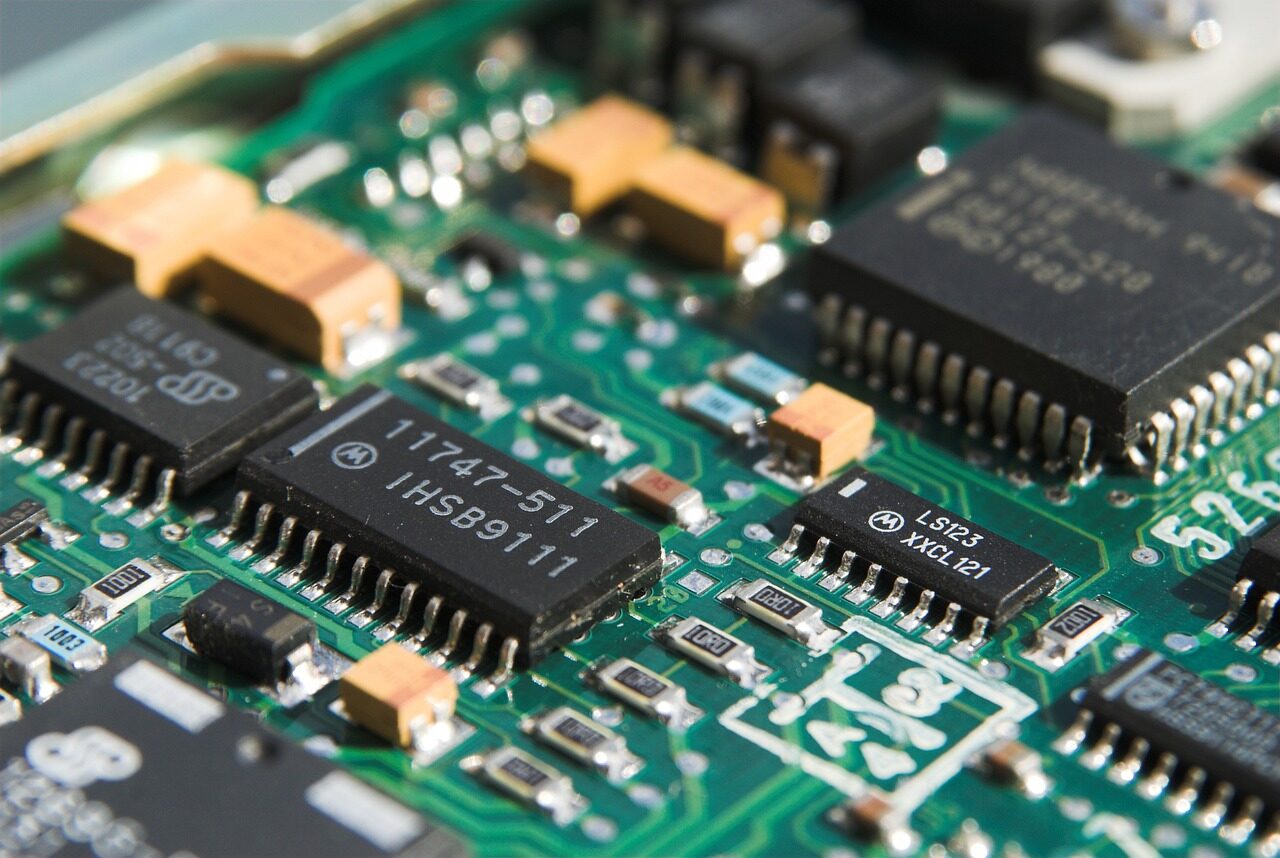
How agreeing on a standard way to ask for things made the modern, plug-anything-in world possible.
- Shared standards let very different devices be asked for things in the same way.
- A common language is what makes plugging something new in feel effortless.
- Agreeing on how to ask saved everyone from reinventing the same connections.
- Standards trade a little freedom for an enormous gain in cooperation.
Consider how many different devices a single computer might work with over its life: a visual processor, a sound component, a connectivity adapter, storage of several kinds, and small input devices besides. Each was designed by different people, at different times, with different ideas. And yet, when you bring a new one into the picture, it usually just works. That quiet everyday achievement rests on a single powerful idea: agreeing on a common language.
Without such an agreement, every program would have to know the private details of every device it might ever encounter. That is an impossible burden. A writing tool should not need to understand the inner workings of a display, nor a media player the precise habits of an audio component. The solution is not to teach every program everything, but to agree on a shared way of asking for things, and let drivers handle the specifics behind that shared front.
The problem a common language solves
Imagine a marketplace where every merchant spoke only their own private dialect and refused to learn any other. Trade would grind to a halt, because each new pairing would require its own custom arrangement. The amount of effort would grow impossibly fast as more people joined. Computing faced exactly this danger as devices multiplied.
A common language cuts through that tangle. Instead of countless private arrangements, there is one agreed way to express a kind of request. Everyone learns that one way. The savings are enormous, and they compound as the number of participants grows.
How the agreement works in practice
The shared language usually takes the form of standard categories and standard requests. Rather than addressing a specific component, software addresses a type of thing in a defined manner:
- 1Standard roles: Devices are grouped by what they do, so the system can treat all members of a group through the same general interface.
- 1Standard requests: For each role there is an agreed set of things one can ask, phrased the same way regardless of which particular device answers.
- 1Private translation: Each device's driver receives those standard requests and quietly converts them into the exact instructions its own hardware needs.
The beauty of this arrangement is the division of labour. The makers of the operating system define the common language. The makers of each component write a driver that listens for it. Neither side needs to know the other's deepest secrets. They only need to meet at the agreed words in the middle.

The quiet discipline of a standard
A common language only stays useful if everyone honours it carefully, and that takes discipline. A standard is a promise: the system promises to ask in the agreed way, and each driver promises to understand those requests and answer in the agreed form. When both sides keep the promise, an enormous variety of hardware can be treated as if it were one well-behaved family.
This discipline has a calming effect on the whole machine. Because the agreed requests behave predictably, the system can plan around them with confidence. It does not have to guess what a particular reply might mean or brace for surprises in how a device answers. The standard removes a great deal of uncertainty, and removing uncertainty is much of what makes a computer feel dependable.
Room to differ within the rules
A good common language does something subtle: it fixes what must be shared while leaving room for devices to be different. The agreed requests cover the things every member of a group must be able to do. Beyond that, individual components are free to offer extra abilities, and their drivers can expose those abilities when asked. The standard sets the floor, not the ceiling.
This is why two components that answer the very same requests can still differ in character. One may be plainer and one more capable, yet both present the same dependable face to the system for the basics. The shared language guarantees that the essentials always work, while still allowing the variety and competition that push hardware forward. It is a careful balance between sameness, which brings reliability, and difference, which brings progress.
Why this made the modern world possible
The reason you can connect something built years apart from your system and have it cooperate is that both sides honour the same agreement. The new device speaks the common language through its driver; the system understands that language; understanding follows. No special bargain has to be struck for each pairing, because the bargain was struck once, in the open, for everyone.
This is also why the same hardware can keep improving. As long as a driver keeps presenting the agreed language upward, its makers are free to refine how it talks to the hardware below, finding better ways to honour the same requests. The promise to the system stays constant while the craft behind it grows.
A common language is, in the end, an act of trust and cooperation. Each participant gives up a little freedom to phrase things exactly as they please, and in return gains the ability to work with countless others without negotiation. It is the same bargain that makes any shared standard valuable, from currencies to road signs.
Everything described here is explained for understanding alone. This site does not offer files to install or links to follow; it simply aims to make a quiet but foundational idea feel clear and approachable. The next time a new device cooperates with your computer on the first try, you can recognise what made it possible: not luck, but a patient, long-standing agreement to speak in a way that everyone can understand.
What does a common language actually look like here?
It is a shared set of agreed ways to make requests, so any device that follows the agreement can be spoken to using the same basic vocabulary.
Could computers work without these standards?
They could, but every device would need its own bespoke handling. Standards are what turned a tangle of special cases into a simple, plug-anything-in world.